






Whitepaper
Campaign effectiveness: Getting noticed is only the beginning
Uncovering how marketers can turn attention into action through campaigns that drive meaningful brand impact.
Whitepaper
Uncovering how marketers can turn attention into action through campaigns that drive meaningful brand impact.
Today’s marketers are under increasing pressure to make budgets work harder, maximize return on investment (ROI), and drive impact from every campaign. But marketing effectiveness is not simply about achieving more with less.
Les Binet and Will Davis recently reignited an important debate on this challenge in Go Big or Go Home, published by the Institute of Practitioners in Advertising (IPA), the UK’s professional body for advertising agencies. They argue that brands should resist advertising austerity, because they cannot cut their way to growth. Their argument is clear: campaigns need sufficient investment to achieve scale – the combination of reach, frequency, and consistency over time – because efficiency alone does not create meaningful business impact.
Recent IPA analysis further reinforces this point. Campaign ROI has improved, but overall profit has declined, highlighting the limits of optimization without real campaign investment.
That diagnosis is hard to argue with. But “go bigger” is not the whole story…
About this whitepaper
400+
campaigns analyzed
Since 2023
lift analysis by Toluna
Global
markets and categories
In this whitepaper, we look beyond scale to explore what truly makes a campaign effective. Drawing from a lift analysis of over 400 campaigns conducted by Toluna across global markets and categories since 2023, we examine how campaigns convert attention into meaningful action.
✓ What it takes to deliver impactful campaigns
✓ Which KPIs to focus on (and when)
✓ How scale and substance go hand in hand
✓ Practical tips to incorporate in your campaign strategy
Scale determines how many people can see a campaign, but it does not tell you whether the campaign is working. Campaign effectiveness is about understanding the role the campaign plays in making the brand more noticeable, more memorable, and more likely to be chosen. Scale is volume – effectiveness is what turns noise into music.
In other words, impactful campaigns need to do two things at once: be big enough to get noticed, and strong enough to create meaningful brand movement.
The next question is: What does meaningful brand movement look like? The answer depends on the metric. Let’s look at why.
Part 1
Benchmarks from Toluna’s lift analysis.
1
At the highest level, expectations need to be realistic.
For most brands, awareness is hard to shift, and progress tends to be subtle rather than transformative.
The implication is simple: small movements are not weak outcomes; they are meaningful ones.
In a fragmented media landscape, even a 1–2 point shift on awareness signals genuine cut-through. Dismissing these gains risks undervaluing effectiveness at the stage where movement is hardest to achieve.
It also reinforces a broader truth: awareness is not driven by campaigns alone. Distribution, promotion, existing buyers and category context all play a critical role in shaping baseline visibility.
+1.2%
Average spontaneous awareness lift
+3ppt
A +3ppt lift in spontaneous awareness that would put a campaign in the top third of global performers
Source: Toluna lift analysis of over 400 campaigns across global markets and categories, since 2023.
2
Brand preference is a measure that typically takes time and sustained investment to change.
This is not to say that preference should be overlooked – from our global market validations we know it has a strong relationship with Value Share. However, in single campaign measurement it needs to be treated differently. Given how difficult it is to move, Preference is better positioned as a long-term stretch target rather than a short-term expectation. It reflects a more stable, harder-to-shift measure that typically builds over time rather than through a single campaign.
Over-emphasising preference as a campaign KPI risks setting unrealistic expectations. A more practical focus is a campaign’s ability to drive consideration, recommendation and intent – the metrics that show whether cut-through is also helping stimulate changes in choice.
2.4%
Average Preference lift
25%
Only 25% of campaigns achieve a +5ppt lift
Source: Toluna lift analysis of over 400 campaigns across global markets and categories, since 2023.
3
Consideration is often one of the most responsive measures to campaign activity. It tends to move more consistently than Awareness or Preference, while still maintaining an important relationship with value share.
That makes it a highly practical KPI for marketers – sitting between breakthrough and behavior. It reflects whether a campaign has not only been seen but has helped bring the brand to mind in a decision situation.
Cross-metric lift analysis also shows that campaign effects tend to move together. Consideration is often associated with broader shifts across familiarity, recommendation, and other measures, reflecting how campaign effects tend to move together rather than independently.
This is where attention starts to influence choice. The campaign is seen and the brand is shortlisted. If marketers need a single, practical KPI to monitor in-flight performance, Consideration often provides the most useful balance of responsiveness and commercial relevance.
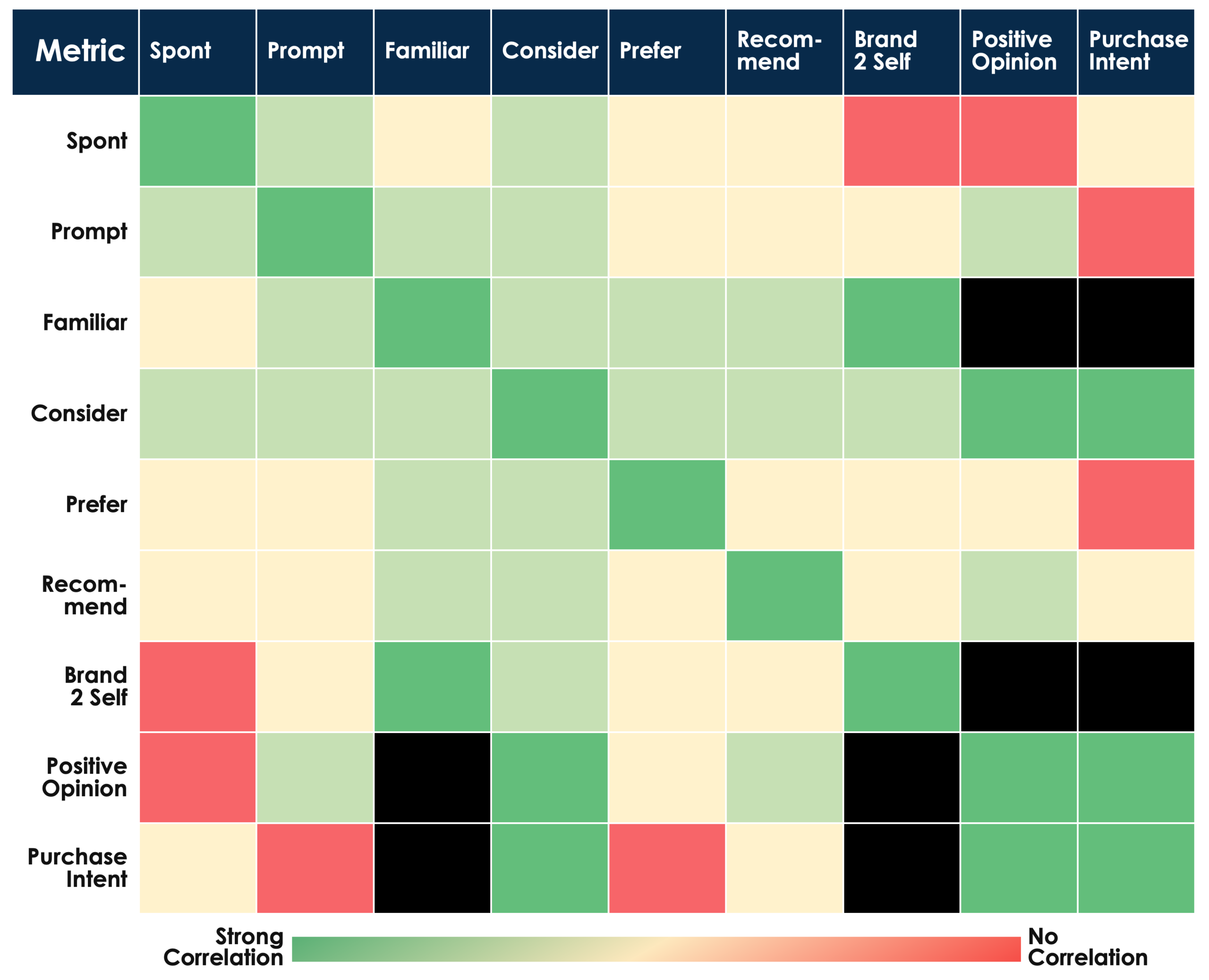
Source: Toluna lift analysis of over 400 campaigns across global markets and categories, since 2023.
Part 2
What this means for how campaigns are planned and measured.
While preferences may be embedded, brand loyalty is rarely absolute. Consumers are constantly weighing alternatives and remain open to switching if something captures their interest.
This challenges the assumption that buying behaviour is fixed or slow to move.
Consumers are open to trying new things. The challenge is not willingness – it is earning consideration and building towards the tipping point of being chosen.

Broke into a crowded UK lager market and built 20% volume share in Spanish lager in two years – proof that purchase momentum can scale quickly when consideration is unlocked.

Launched in 2005 to fill a seemingly unnecessary gap and is now a global growth engine – demonstrating how a good product and strong proposition can unlock new demand.
The implication is important: strong campaigns can drive profound shifts in buying behavior, often faster than expected.
While it is tempting to isolate “drivers” of performance, the reality is more interconnected. Campaign effects tend to be co-dependent: salience, brand perception, and consideration build together rather than in isolation.
The more important takeaway is how campaigns are designed.
The strongest campaigns tend to have clear brand objectives – whether that is reinforcing a key message, shifting perception, or strengthening relevance in key buying moments.
At a high level, campaigns work through a combination of:
Campaigns that only deliver scale may get seen, but they do not necessarily leave people with anything to remember or act on. Campaigns that create memorability, resonance and relevance are far more likely to convert attention into action.
Understanding whether a campaign is creating worthwhile movement requires looking beyond campaign metrics in isolation and understanding how those effects contribute to broader brand health. Our EMP framework – Toluna’s brand equity model combining emotional resonance, mental availability and perceived effort – provides a lens for understanding how shifts in salience, relevance and closeness work together to support long-term brand growth.
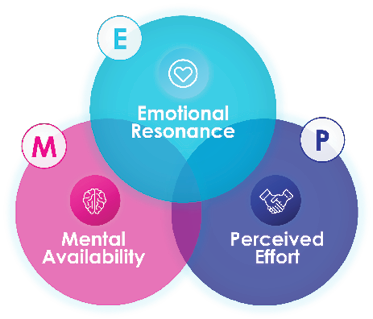
For strategic diagnosis of brand equity challenges and opportunities, providing guidance on where to focus in the future.
Scale remains essential, but it only creates the opportunity for impact. What matters is what happens within that scale.
A more useful way to think about campaign effectiveness is as scale combined with movement – not just how many people were exposed, but how many people were influenced.
Rather than separating delivery and effectiveness, campaigns should be evaluated on total impact – the amount of brand movement created at scale.
This reframes the question:
Scale creates the opportunity to drive impact – but only when paired with effectiveness.
Taken together, the implications are clear and have implications on campaign strategy:

Earn attention first – build salience and cut-through, and recognize that even small lifts matter.
Monitor consideration – it often provides a practical bridge between attention and choice.
Convert attention into meaning – focus on creative and messaging that gives people a reason to care, remember, and act.
Focus on substance – not just whether people saw your campaign, but whether it moved the brand closer to choice. That means strengthening awareness, consideration, closeness, and mental availability.
Invest sufficiently in your campaign – scale is a prerequisite for effectiveness. Underinvestment limits impact.
Across categories, a consistent pattern emerges: campaigns that successfully convert attention into consideration are more likely to drive stronger impact.

Campaign effectiveness is not just about how many people you reach. It is about how many people you move.
Small gains in awareness signal cut-through.
Consideration reflects whether attention is turning into choice.
Specific campaign objectives indicate strategic brand effectiveness.
The strongest campaigns connect all three, moving people from seeing the brand to remembering it and choosing it. That’s what we focus on at Toluna – understanding how these signals build together, rather than treating them in isolation.
With that, marketers can take a more holistic approach that combines scale and effectiveness. Because scale creates the opportunity, but it’s the ability to turn that opportunity into movement that drives real impact.

Dan Braithwaite, European Creative and Campaign Insights Leader at Toluna
Dan Braithwaite is a research leader with over a decade of experience helping global brands turn insight into impact. Blending analytical rigor with creative curiosity, he loves exploring how emerging methodologies can answer real business questions with credibility and confidence. Having spent his career partnering with leading brands on communications and campaign effectiveness, Dan has seen first-hand how audience expectations, media behaviors and cultural trends continue to evolve. His work focuses on helping clients navigate what’s changing, what’s not, and what genuinely drives business growth.